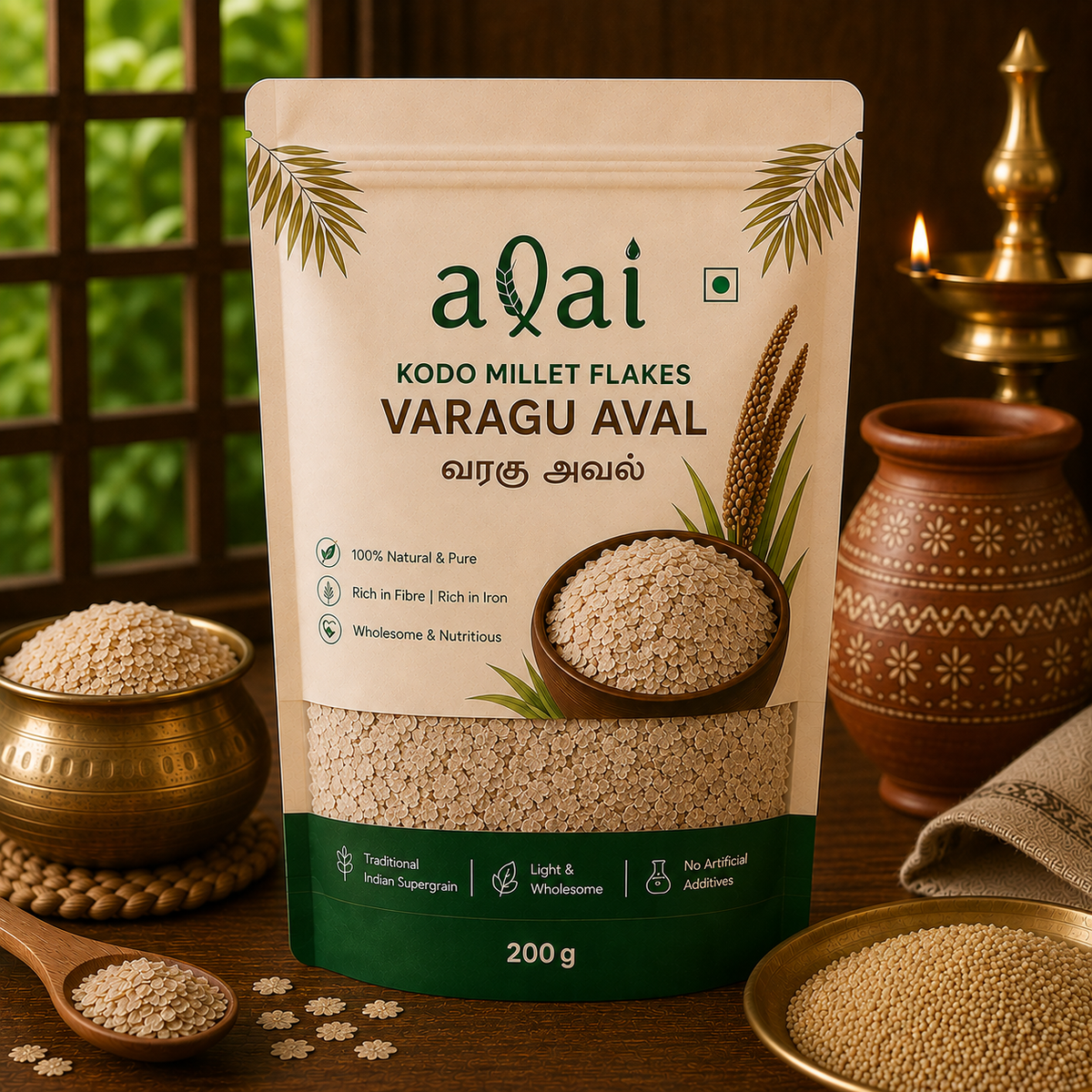
What kodo millet flakes are
Whole kodo millet is cleaned, steamed and pressed flat between rollers. Nothing added, nothing stripped out. The same grain, pre-cooked and flattened so it softens in minutes instead of the long soak whole varagu demands.
Varagu is the millet that most rewards flaking. As whole grain it needs an hour's soak and a long cook — the flakes cut that to a few minutes without changing what the grain is.
The most substantial flake we sell
Kodo flakes are thicker and hold their shape better than the others. They stay separate in a poha instead of collapsing, and they leave you fuller than the same volume of samai or barnyard would.
That firmness makes them the best of our flakes for a proper meal rather than a light breakfast.
Where each of ours fits:
| Flake | Character | Best for |
|---|---|---|
| Kodo | Firm, filling | Hearty poha, upma, a full meal |
| Jowar | Neutral, firm | Savoury poha, chivda |
| Barnyard | Soft, mild | Children, gentle poha |
| Samai | Fine, creamy | Porridge, kheer |
| Ragi | Dark, earthy | Sweet milk bowls |
| Kambu | Strong, grainy | Koozh, kanji |
Why customers choose ALAI
- Made from whole varagu. Nothing stripped out in the flaking.
- No additives. No sugar, salt, colour, preservatives or flavouring.
- Processed in our own unit. Our grain, our cleaning, our flaking.
- Small batches. Flakes stale faster than whole grain, so we don't hold long stock.
- Unsweetened and unsalted. You decide what goes in.
How to use it
Varagu poha — rinse and drain, temper mustard, curry leaves, green chilli, onion, turmeric and peanuts, fold the flakes in, cover off the heat 4 minutes. These take slightly longer than our other flakes and hold together better. Finish with lemon.
Upma — dry roast 2 minutes, then add to your tempering with hot water at roughly 1 cup flakes to 1.75 cups water. More water than the finer flakes need.
Lemon or tamarind aval — the firmness suits these. Cook as poha, then fold through your lemon or puliyodarai paste.
Curd flakes — soak in curd 12 minutes, salt, temper with mustard and curry leaves. Needs longer than the softer flakes.
Milk bowl — soak in warm milk 7 minutes with jaggery and fruit. Chewier than a ragi or samai bowl, which some people prefer.
Chivda and mixture — dry roast or shallow fry with peanuts, curry leaves and spices. Along with jowar, this is one of the two that stands up to frying.
The main thing: kodo flakes need more time and more liquid than the rest of our range. If you've been cooking samai or barnyard flakes, add a couple of minutes and a splash more water.
Product details
| Brand | ALAI |
| Product | Kodo millet flakes |
| Also known as | Varagu aval, varagu flakes, kodra flakes, arikelu aval, harka aval |
| Made from | Whole kodo millet (Paspalum scrobiculatum) |
| Processing | Cleaned, steamed and roller-flaked |
| Ingredients | 100% kodo millet. Nothing added. |
| Available in | 200 g |
| Packaging | Food-grade sealed pouch |
| Shelf life | 4 months from packing |
| Storage | Airtight container in a cool, dry place |
| FSSAI Lic. No. | 22426306000092 |
A note on storage
Flakes take up moisture faster than whole grain. Keep the pouch sealed, decant into an airtight jar after opening, and use within a few weeks. Two minutes dry roasting on a low flame restores crispness — kodo flakes are thicker, so they take the roast better than the fine ones.